
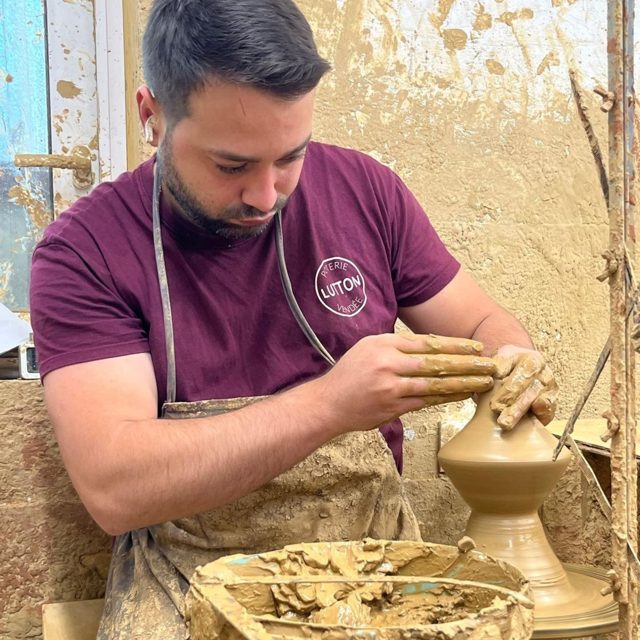
Poterie Lutton is based at Le Four Lutton, in La Merlatière, Vendée (western France). Clay has been worked here since the 18th century.
The name Lutton comes from the Latin lutum, meaning clay. The workshop is still in the hands of the same family: it is run by Patrice Jeaud, son of Madame Lutton, alongside Thierry and Olivier Lutton.
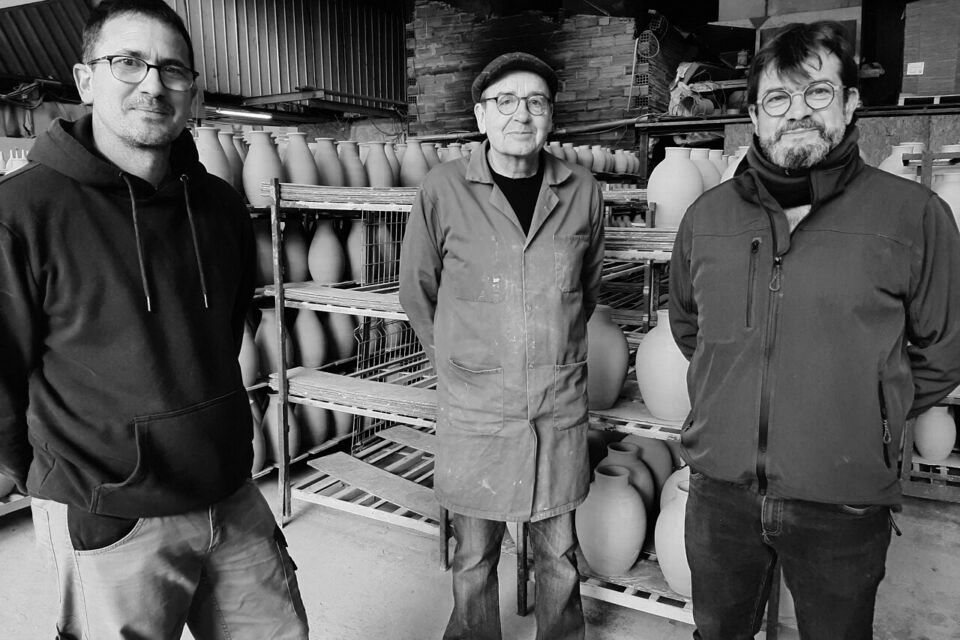
Olivier Lutton, Thierry Lutton and Patrice Jeaud, partners at Poterie Lutton
From roof tiles to ollas
- 18th century A craft tile works opens at Le Four Lutton.
- Then It becomes a brickworks, still devoted to terracotta.
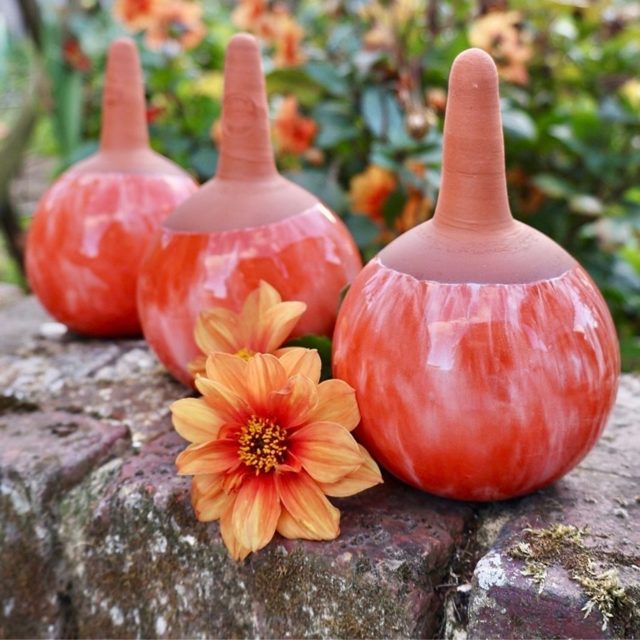
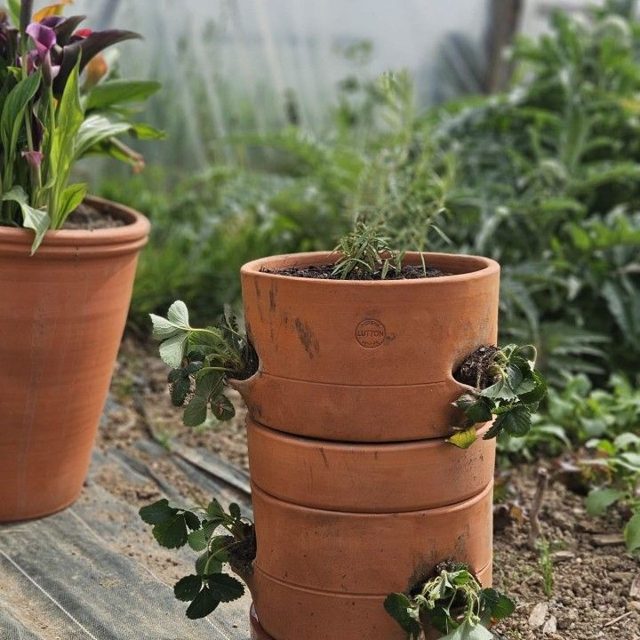
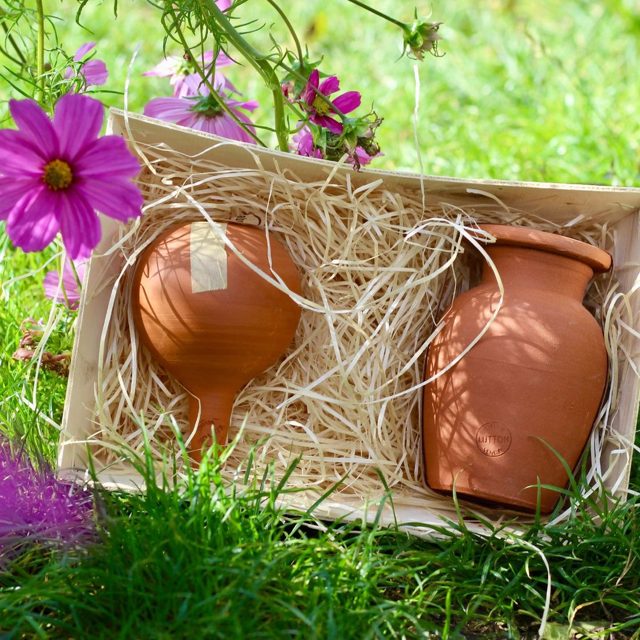
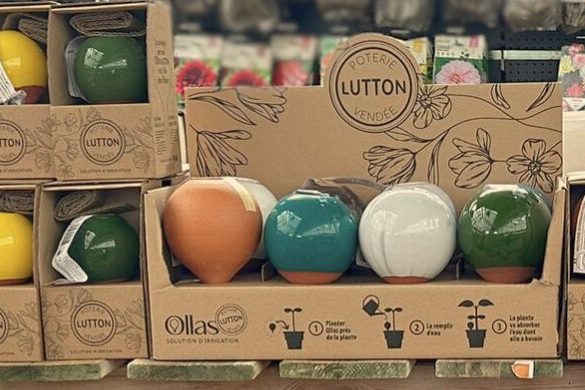
- Today A craft pottery: irrigation ollas, pots and composters, all shaped by hand. Buried in the garden, ollas save 50 to 70% of water.
- 2025 The workshop is awarded the Entreprise du Patrimoine Vivant (Living Heritage Company) label.
What guides us
- Transparency Every step of our work is carried out honestly and clearly, with respect for our customers and partners.
- Tradition Our pottery is made using techniques handed down for generations.
- Innovation We look for new, sustainable solutions to today’s needs, without forgetting our roots.
- Craftsmanship Behind every piece lies a mastery of clay built up over the years.
The workshop team
Experienced potters from Europe and beyond, young apprentices and an office team: from preparing the clay to packing, everyone has a role. The Lutton family sometimes even delivers your orders themselves.
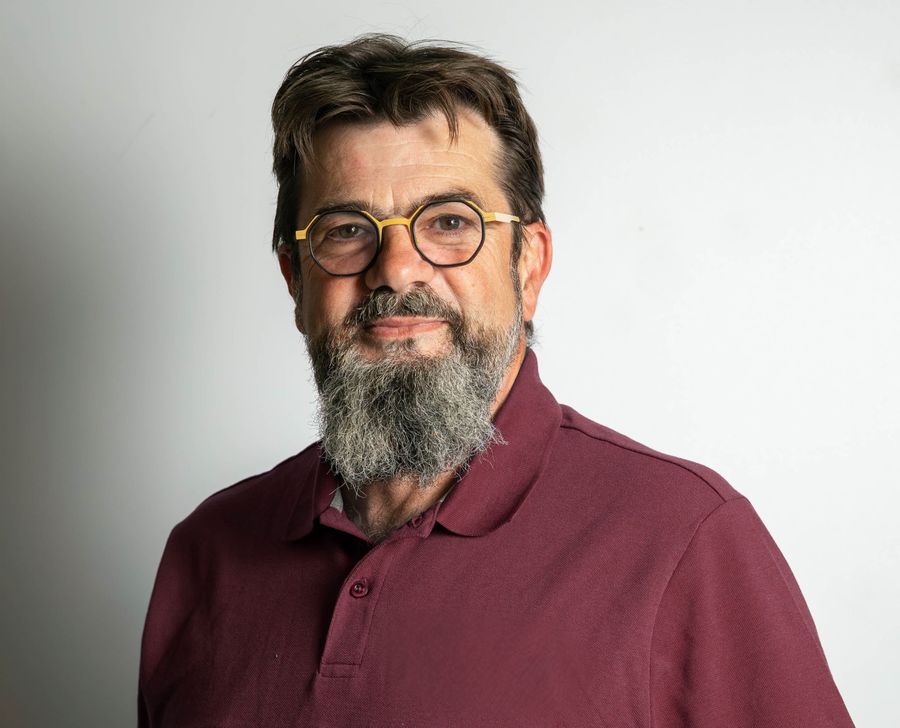 Patrice Jeaud Managing director
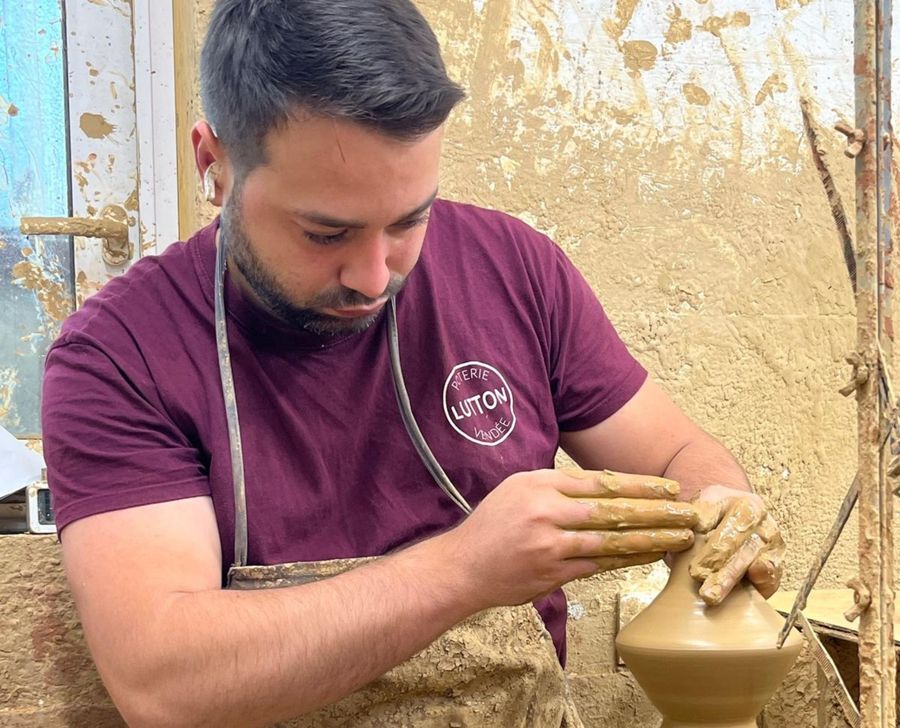 Mohamed Potter, he throws your pottery on the wheel
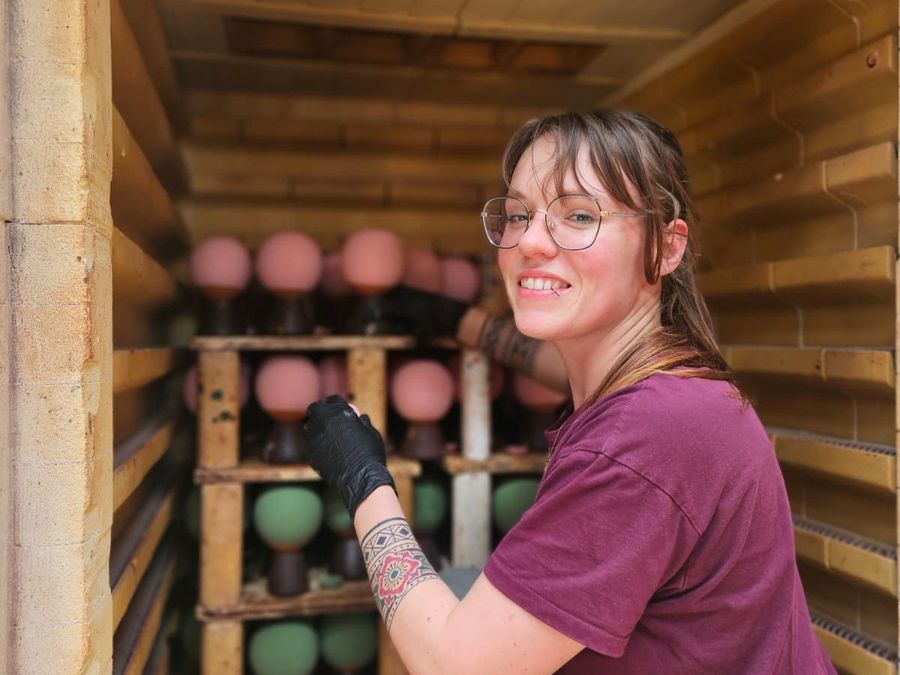 Charlotte Assistant potter, glazing and firing
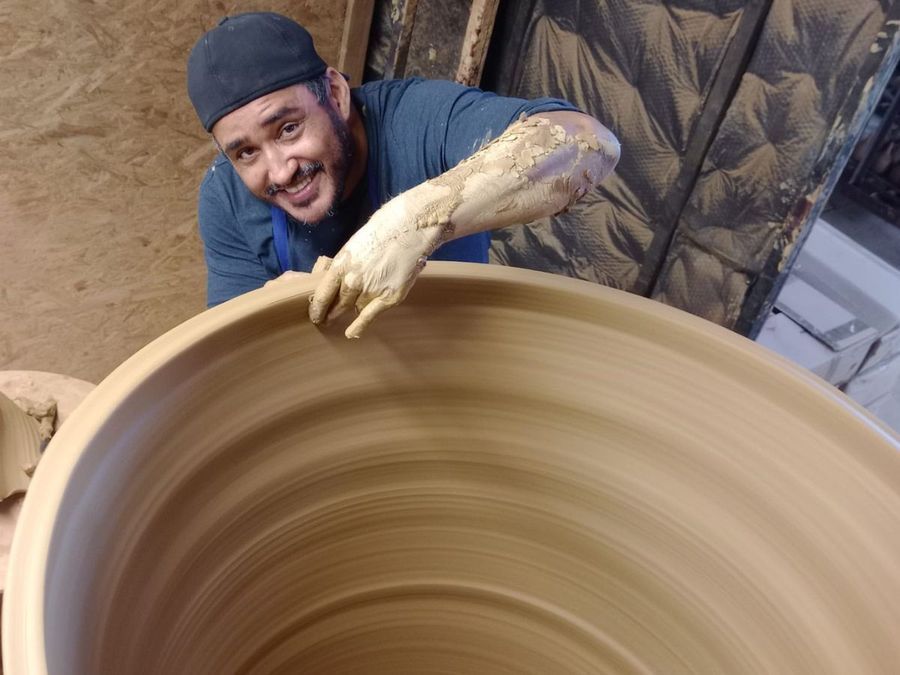 Roberto Potter from Brazil
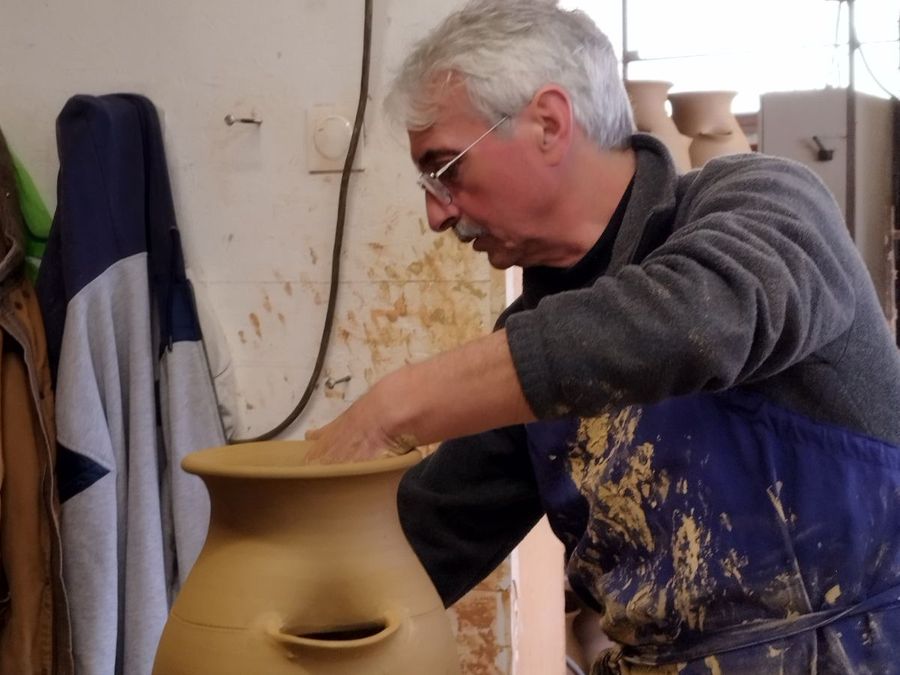 Antonio He pierces the strawberry towers by hand
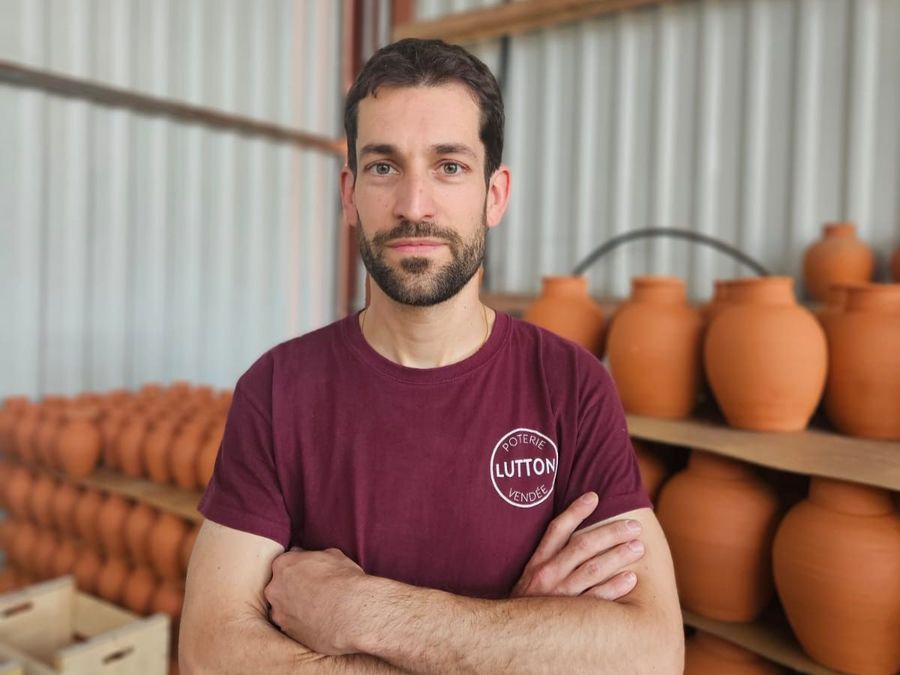 Grégoire Order preparation
 Maïssane and Luna Management, communications, administration and customer service
A workshop open to the world
In France, qualified potters are becoming hard to find. In La Merlatière, everything is made on site, by hand, by craftspeople from Brazil, Portugal, Tunisia and other countries.
Each brings their own techniques and culture. Experienced potters and apprentices are free to suggest new pieces: that is how the workshop keeps a traditional craft alive and looking ahead.